
If you’re thinking about selling your home—even if it’s months down the road—you’ve probably noticed something frustrating: most real estate agents sound exactly the

Dated: November 24 2025
Views: 61
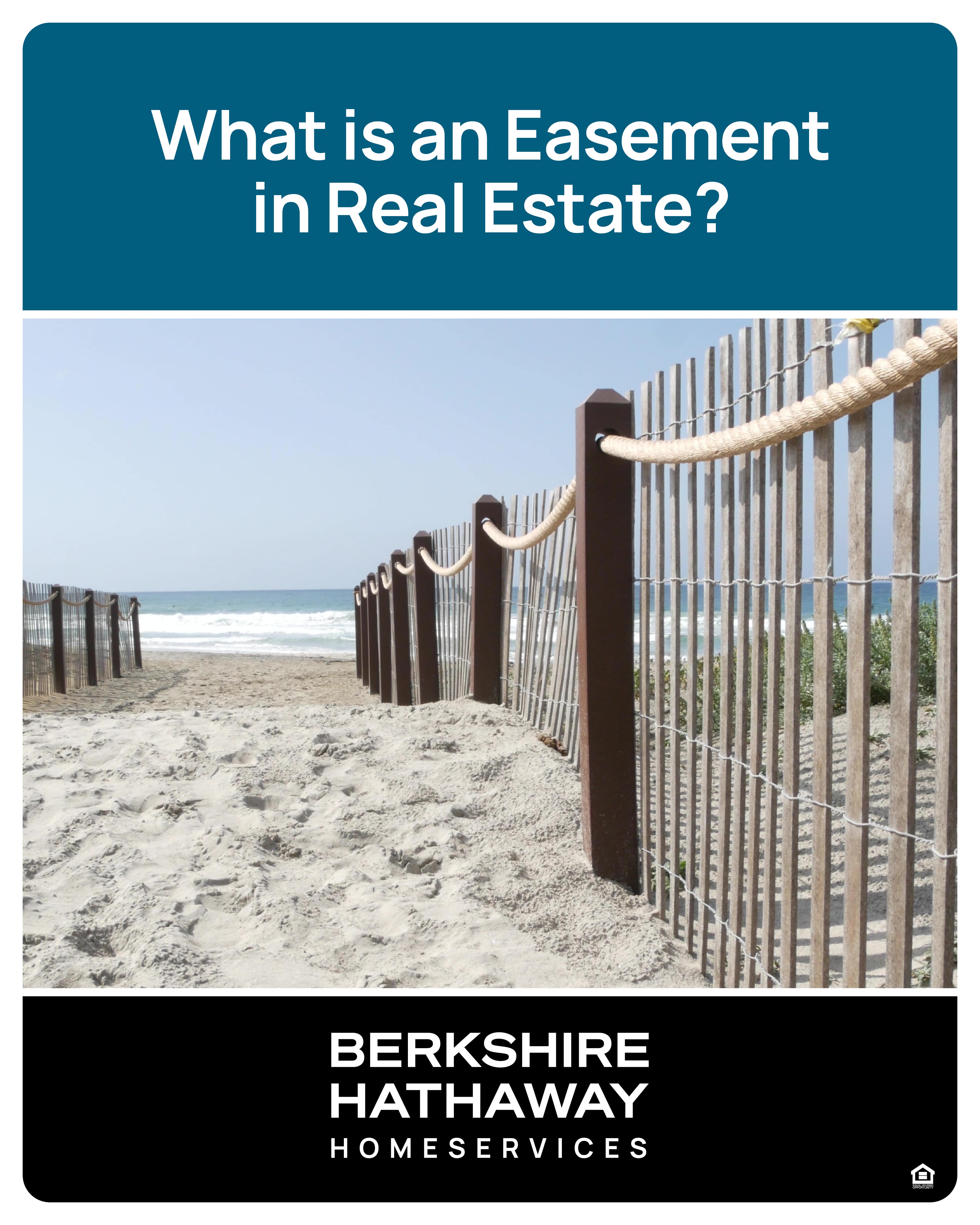
Did you know you can own a piece of property… and still have part of it that isn’t solely for your own use? Or that you might have the right to use a portion of someone else’s land?
Yep—both can happen, and it all comes down to something called an easement.
An easement is simply a legally defined right that allows another individual, business, or government entity to access or use a specific part of your property for a particular purpose.
If you own land, you might allow a neighbor, utility company, or government agency to use a portion of it for something very specific—like a shared driveway, access for a road, water rights, or space for utilities. These agreements keep things running smoothly and help properties function the way they should.
Easements can come about in two main ways:
Express Easement: This is the official kind—written down, recorded, and part of your property’s legal documents.
Implied Easement: A verbal or informal agreement based on use or necessity.
Affirmative Easement: Gives someone else the right to use a portion of your property (think: a driveway shared between neighbors).
Negative Easement: Limits what you can do on your land—usually to preserve natural features or protect a neighbor’s views, sunlight, or access. These are often used to protect scenic areas, historic land, or to keep property values steady.
A private easement is between property owners. It might be as simple as letting the neighbor’s kids fish in your pond or as formal as granting driveway access. Some transfer with the property, and some don’t—unless the agreement specifically says so.
A prescriptive easement can happen when someone uses a portion of land openly and continuously for a long period (often around 10 years depending on the state). Think of a beach path that neighbors have used forever—eventually it can become legally recognized even if ownership changes.
A public easement, on the other hand, is for the greater good. Sidewalks are the perfect example: they let the public walk safely, but they don’t give people permission to wander into your yard or your home.
These are super common. Utility companies may need access to run water lines, sewer, electric, gas, or internet. Once utilities are in place, property owners can’t block access. That’s why you may see crews working in a yard—they’re legally allowed to be there.
An easement appurtenant is permanent. It “runs with the land,” meaning it transfers to new owners when the property is sold. This often shows up when someone’s land is only accessible by driving across a neighbor’s property or when a property backs up to a public space.
And even though we sometimes hear “private beach,” many coastal states allow public access up to the tide line. Property rights and public rights meet in the middle—which can get tricky if visitors disrupt the peace or cross into truly private space.
As a buyer, you’ll want to know:
Does the property have easements?
Are you the one using the easement?
Or are you granting access to someone else?
The property that uses the easement is called the dominant estate.
The property that grants the easement is the servient estate—think of it as “serving” access.
Here’s where to look:
The legal description of the property
County records or the county clerk’s office
A professional land survey
A title search
Utility companies (they know where their lines run)
Zoning or planning departments
The warranty deed, if you're already under contract
A real estate attorney for final confirmation
Easements aren’t automatically a bad thing—they’re just part of understanding exactly what you’re buying or selling. And when you know what you’re looking at, you can make confident, informed decisions.
If you ever have questions about easements on a property here in Indiana, I’m always happy to help walk you through it—tie dye style, simple and stress-free.

Crystal Anderson | Managing Broker | Regional Vice President | Berkshire Hathaway HomeServices Indiana Realty (Columbus, IN)Crystal Anderson—widely known as “The Tie Dye Agent”&mdash....
If you’re thinking about selling your home—even if it’s months down the road—you’ve probably noticed something frustrating: most real estate agents sound exactly the
2026 Home Design Trends: Comfort, Function & Intentional LivingHome design in 2026 is less about chasing fads and more about creating spaces that feel good to live in. Think warmth over sterile,
How Experts Predict Where the 2026 Real Estate Market Is HeadedReal estate headlines can feel like a kaleidoscope—constantly shifting colors, opinions, and predictions. One day it’s
When Selling a Home “At Lot Value” Makes SenseSometimes a home—especially one that’s inherited or hasn’t been updated in decades—needs more work (and money) than
 MIBOR REALTOR® Association All information deemed reliable but not guaranteed. All properties are subject to prior sale, change or withdrawal. Neither listing broker(s) or information provider(s) shall be responsible for any typographical errors, misinformation, misprints and shall be held totally harmless. Listing(s) information is provided for consumer's personal, non-commercial use and may not be used for any purpose other than to identify prospective properties consumers may be interested in purchasing. The data relating to real estate for sale on this website comes in part from the Internet Data Exchange program of the Multiple Listing Service. Real estate listings held by brokerage firms other than Berkshire Hathaway HomeServices Indiana Realty - Columbus may be marked with the Internet Data Exchange logo and detailed information about those properties will include the name of the listing broker(s) when required by the MLS. Copyright ©2026 All rights reserved.
Last Updated: September 22, 2026 8:10 PM UTC
MIBOR REALTOR® Association All information deemed reliable but not guaranteed. All properties are subject to prior sale, change or withdrawal. Neither listing broker(s) or information provider(s) shall be responsible for any typographical errors, misinformation, misprints and shall be held totally harmless. Listing(s) information is provided for consumer's personal, non-commercial use and may not be used for any purpose other than to identify prospective properties consumers may be interested in purchasing. The data relating to real estate for sale on this website comes in part from the Internet Data Exchange program of the Multiple Listing Service. Real estate listings held by brokerage firms other than Berkshire Hathaway HomeServices Indiana Realty - Columbus may be marked with the Internet Data Exchange logo and detailed information about those properties will include the name of the listing broker(s) when required by the MLS. Copyright ©2026 All rights reserved.
Last Updated: September 22, 2026 8:10 PM UTC
33. Required DMCA Notice
The Digital Millennium Copyright Act of 1998, 17 U.S.C. §512, the DMCA, provides recourse for copyright owners who believe that material appearing on the Internet infringes their rights under U.S. copyright law. If you believe in good faith that any content or material made available in connection with our website or services infringes your copyright, you (or your agent) may send us a notice requesting that the content or material be removed, or access to it blocked. Notices must be sent in writing by email to DMCAnotice@MLSGrid.com. The DMCA requires that your notice of alleged copyright infringement include the following information: (1) description of the copyrighted work that is the subject of claimed infringement; (2) description of the alleged infringing content and information sufficient to permit us to locate the content; (3) contact information for you, including your address, telephone number and email address; (4) a statement by you that you have a good faith belief that the content in the manner complained of is not authorized by the copyright owner, or its agent, or by the operation of any law; (5) a statement by you, signed under penalty of perjury, that the information in the notification is accurate and that you have the authority to enforce the copyrights that are claimed to be infringed; and (6) a physical or electronic signature of the copyright owner or a person authorized to act on the copyright owners behalf. Failure to include all of the above information may result in the delay of the processing of your complaint.
